Blog· October 26, 2026
Built-up roof vs modified bitumen: which shows wear first from above
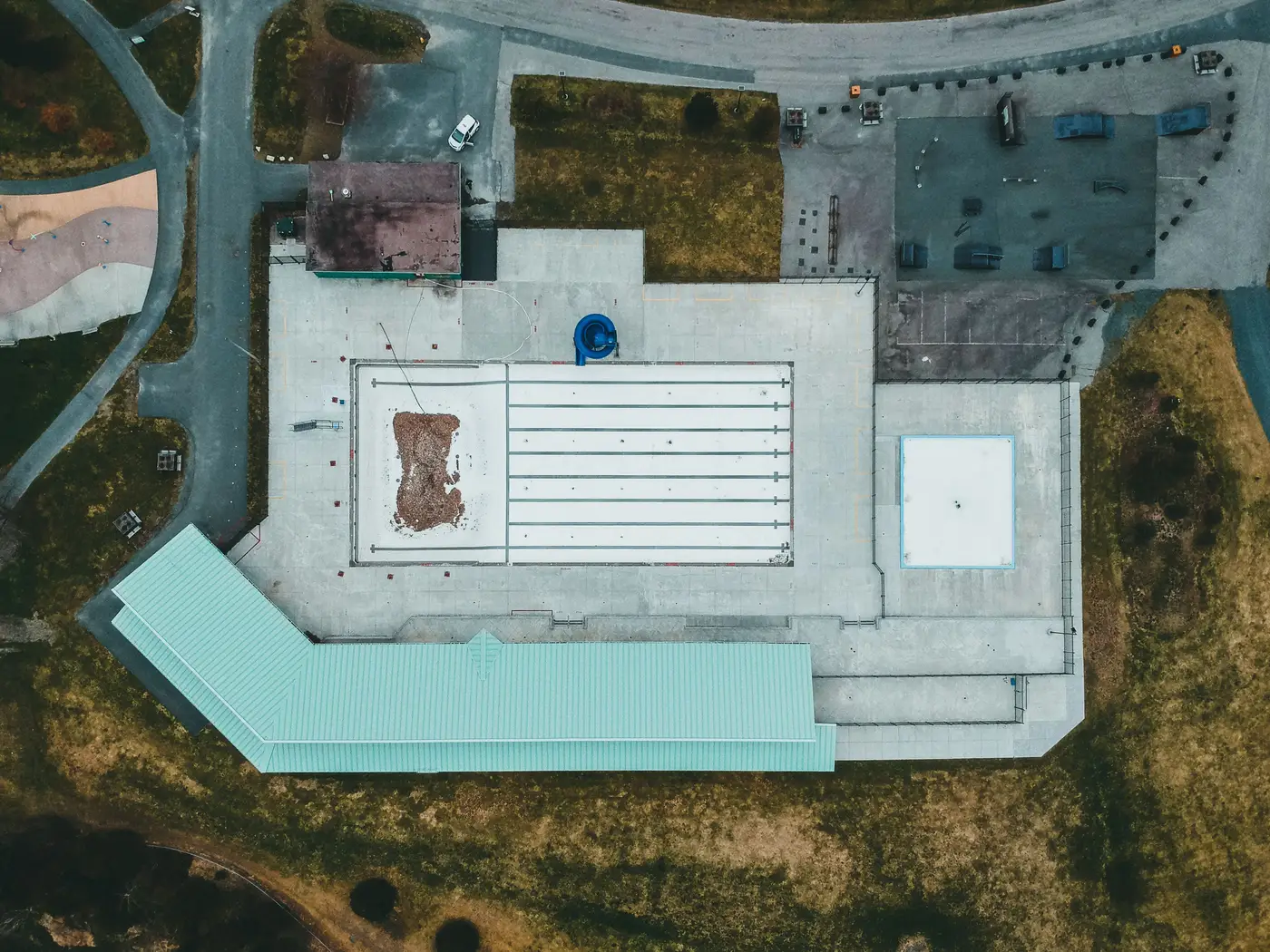
If your portfolio has a mix of built-up roofs and modified bitumen, you already know they don't fail the same way on the ground. They don't fail the same way from above either, and that matters if you're trying to triage a hundred addresses without sending a crew to every one of them.
Built-up roofs wear from the surface down
BUR is layers of felt and asphalt under a gravel or mineral cap, and the first thing to go is usually the surfacing, not the membrane underneath. Gravel migrates and thins in high-wind corners and at drains, exposing dark asphalt patches that read clearly in a high-resolution overhead pass. Alligatoring, that fine cracked-asphalt texture, shows up next, usually on south- and west-facing slopes that take the most UV. Ponding is the other tell: BUR roofs are often low-slope with marginal drainage to begin with, so standing water after a storm shows up as a dark, sharply bounded patch that doesn't dry at the same rate as the rest of the field.
None of that requires walking the roof to catch. At 0.3 m resolution or finer, gravel loss and ponding both show up as a change in surface texture and tone you can flag from a single image, and a dry spell followed by a wet one makes ponding areas easy to confirm on a second pass.
Modified bitumen wears from the seams out
Mod bit is a different animal. It's a cap sheet, granule-surfaced or smooth, torched or adhered in overlapping rolls, and the failure usually starts at the laps before it starts in the field. Seam lift and seam separation are the early signs, visible as thin linear shadows or discoloration tracing the roll pattern, especially at parapet terminations and roof penetrations. Granule loss on cap sheet mod bit shows up similarly to gravel loss on BUR, as a lighter or shinier patch where the asphalt underneath is exposed, but it tends to cluster along traffic paths and equipment pads rather than spreading evenly.
Blistering is the other early flag on mod bit, small raised bubbles where moisture or trapped air has worked between layers. From directly overhead they read as a faint stippled texture rather than a clean patch, which is a different signature than the smoother tonal shift you get from BUR gravel loss.
So which shows wear first in imagery
Short answer: BUR tends to show the obvious stuff (gravel thinning, ponding) earlier and more visibly, because those changes affect a large, flat area of the roof field. Mod bit's early failures concentrate at seams and penetrations, which are a smaller share of the total roof area, so the same age and weather exposure can look worse on a BUR roof in an annual pass even when the underlying membrane condition is comparable. That's worth knowing before you rank two roofs against each other purely on how rough they look from above. A BUR roof with heavy gravel loss but no ponding might still have years left. A mod bit roof with a few lifted seams might be closer to a leak than it looks.
Why this matters for scheduling, not just diagnosis
None of this replaces a roofer's inspection when a roof is already flagged. What it does is tell you which roofs need that inspection this cycle versus next. Running the same condition read across every roof in a portfolio once a year, instead of waiting for tenant complaints or a leak call, is what Asset Condition Review is built around: a single VHR pass scored per site, roof surfacing included, that turns into a ranked list you can drop straight into the capital plan instead of a folder of individual site-visit reports.
If you've got a mixed roof portfolio and no consistent way to compare a BUR roof in one state to a mod bit roof in another, that's exactly the gap worth closing before next year's capex list gets drafted.