Blog· October 19, 2026
Field notes: the week a hailstorm rewrote our capex priority list
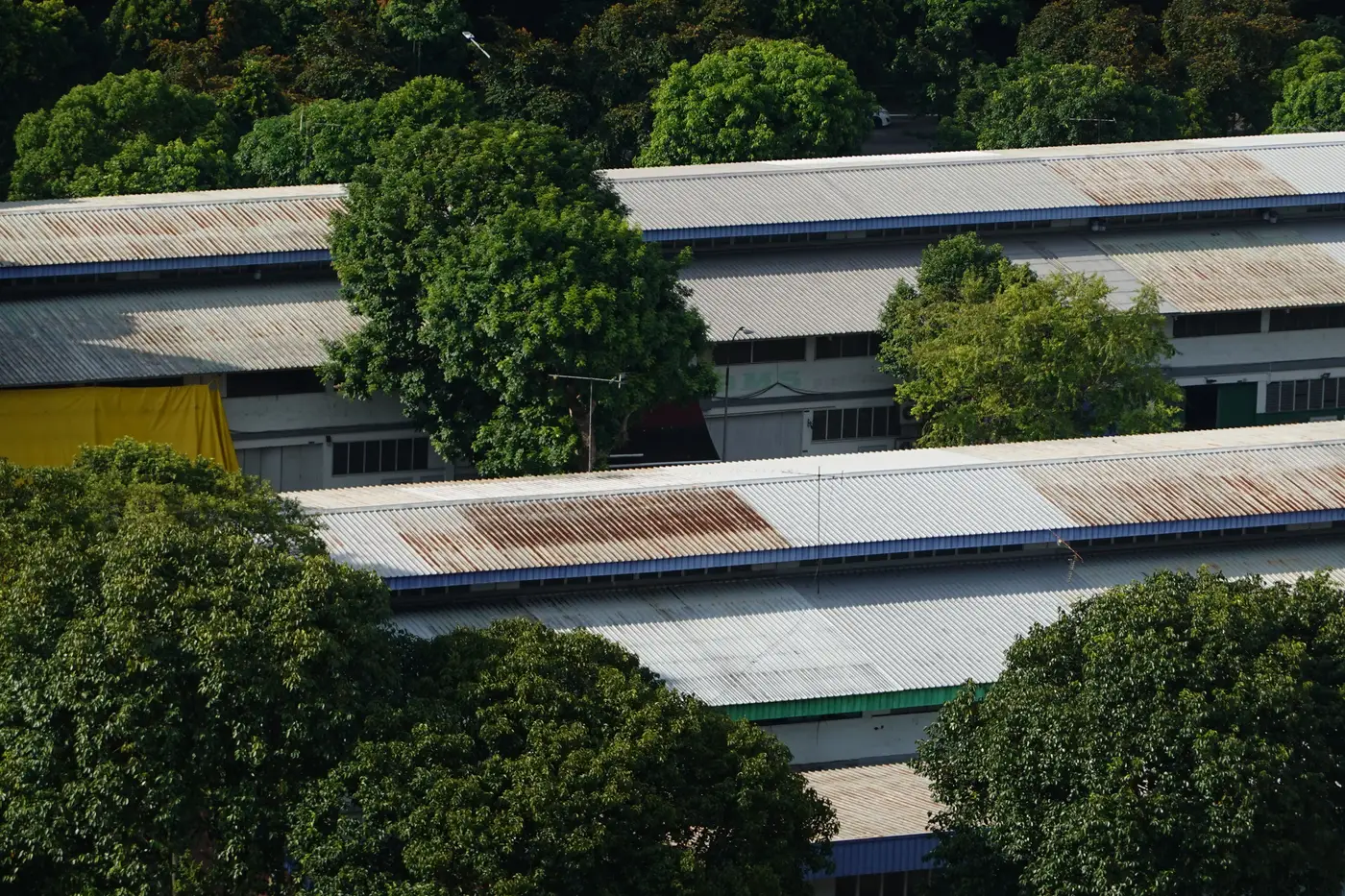
A line of storms moved through the Midwest in early June, the kind that shows up on radar as a thin red stripe and then sits over a metro area for twenty minutes longer than it should. By the time it cleared, a facilities director we talk to had forty-one sites inside the hail swath. His five-year capex list, the one his team had spent February and March building out of reserve studies and roofer walkthroughs, was suddenly wrong in a way that mattered.
Not wrong everywhere. That's the part worth sitting with.
Hail doesn't treat a portfolio evenly. Stone size, wind-driven angle, and roof age all interact, so a property three miles from another can take a direct hit while its neighbor gets grazed. On a shingle roof you're looking for bruising and granule loss. On a flat TPO or EPDM roof, it's scarring and seam stress that often doesn't show up as a leak for another eighteen months, long after the storm is a line item in last year's insurance claim. The asphalt took a beating too, new alligatoring in lots that were sound in March, striping faded by the hail same as a slow decade of UV would have done it.
The instinct after an event like this is to send crews everywhere. Forty-one site visits, scheduled around roofer and paving contractor availability, during the exact weeks when every other property owner in the region is calling the same contractors. That's weeks of lag before anyone has a real answer, and it's the kind of cost that doesn't show up in the capex line. It shows up in the schedule slipping on the properties that actually needed attention first.
What he did instead, because he'd already set it up before storm season, was pull the next scheduled pass forward and run it against the hail swath specifically. Roof surface condition, lot cracking, the usual. The ranked list that came back showed a dozen sites jumping from "watch" to "schedule now," and about as many sites holding steady because the storm track missed them by half a mile. Two properties he'd flagged as fine in the spring review showed fresh surface wear that put them ahead of sites he'd been planning to resurface this fiscal year.
That's the real value of an annual-plus-event pass over a portfolio. It won't predict the hailstorm, nothing does, but when the hailstorm happens, you're not starting from zero. You already have a baseline condition score per site from the spring pass, so the post-storm look is a comparison, not a cold read. "Did this roof get worse, and by how much relative to the other forty" is a very different question than "please drive to forty addresses and tell me what you see," and it's one you can answer inside a week instead of a month of contractor scheduling calls.
The other thing that stuck with us from that week: capex sequencing problems are mostly information problems. The budget didn't change. The properties didn't change. The queue order is what moved, and you settle queue order with better information about which roofs and lots degraded fastest. Teams that treat portfolio condition as a one-time baseline, set in January and left alone until next January, end up making exactly the kind of decision he almost had to make: send everyone, everywhere, and sort it out on-site.
If you're running a reserve study cycle and wondering what a post-event re-score would look like for your own footprint, that's the exact gap Asset Condition Review is built to close: a ranked list and a map layer instead of another round of truck rolls. Worth a look before the next storm front finds your portfolio.