Blog· October 14, 2026
Ponding water vs membrane wear: reading flat roof condition from above
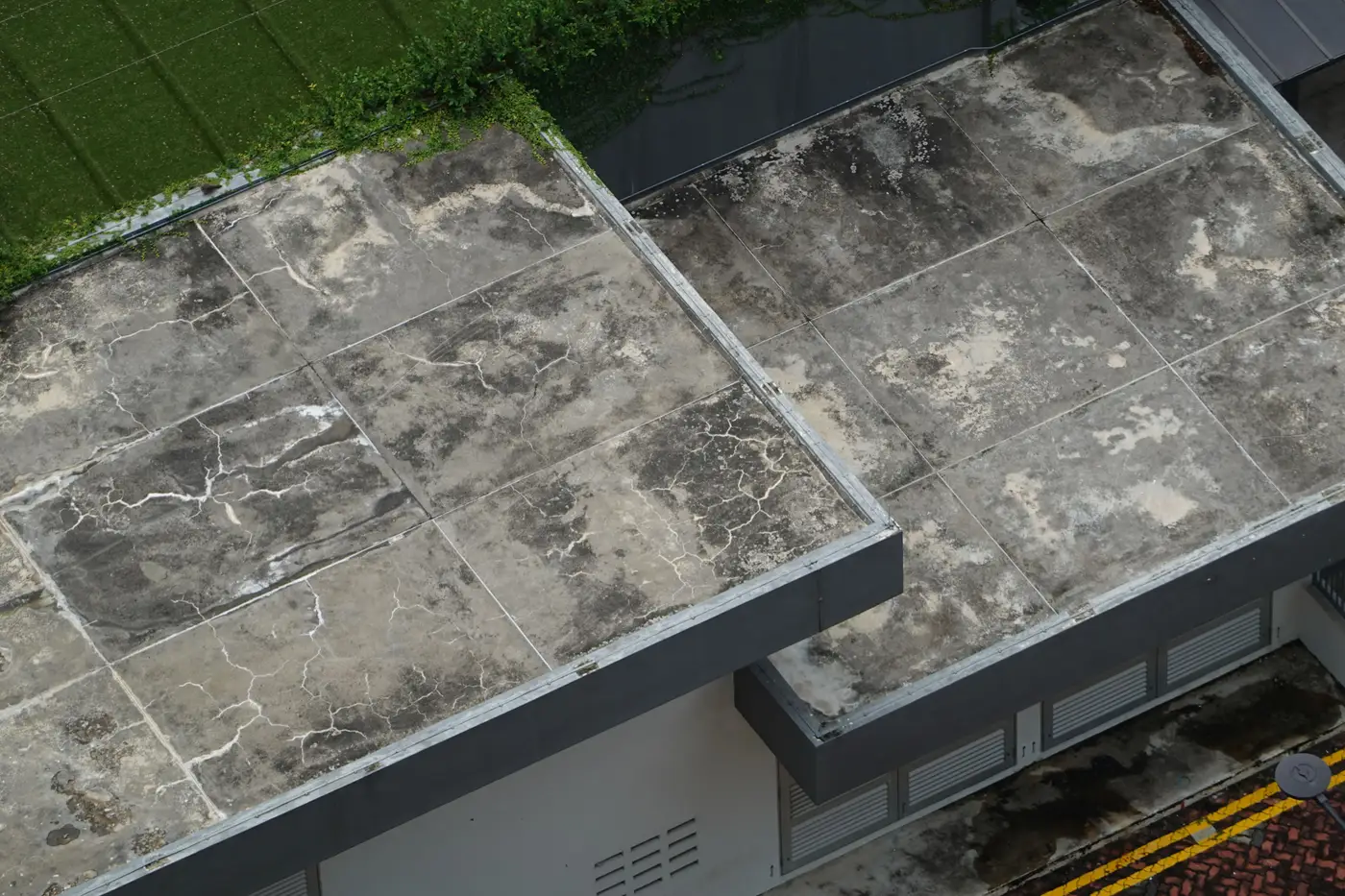
Two things show up as dark patches on a rooftop pull in VHR imagery, and they do not mean the same thing for your capex plan. One is water sitting where it shouldn't, the other is membrane that's failing. Mixing them up either sends a crew to a roof that just needs better drainage, or lets a wearing membrane sit untouched until it's a leak call.
What ponding water actually looks like from above
Ponding water reads as a smooth, often mirror-like patch with sharp, defined edges. At 0.3 m GSD or finer you can usually make out the contour it's following: a low spot near a drain, a sag between purlins, the valley next to an HVAC curb. The color runs dark gray to near-black under overcast skies, sometimes with a visible sky reflection if the pass caught the right angle. The shape is dictated by roof topology, not by the membrane itself.
The giveaway is that ponding moves. Pull two passes, one after a rain event and one from a dry stretch, and a ponding patch will shrink, dry out, or disappear. If you only have one annual pass to work with, cross-reference the capture date against recent precipitation. A ponding call made three days after a half-inch rain reads very differently than the same patch showing up after a six-week dry spell, which is more likely standing water that isn't draining at all, itself worth flagging on its own.
What membrane wear looks like, and why it doesn't move
Membrane wear holds still. TPO membrane wear in aerial imagery usually shows up as a lighter, chalky, mottled texture rather than a dark reflective patch, from UV degradation and surface chalking, and it tends to spread across broad field areas instead of pooling in low spots. EPDM wear reads differently: look for irregular darker mottling that doesn't track drainage contours, or visible seam lines where lap joints have started to lift. Granule loss on modified bitumen shows up as patchy discoloration that follows traffic patterns, around rooftop units, walk pads, access hatches, not water paths.
The practical test: does the dark or discolored area sit at a logical low point, and does it track with rainfall? Probably ponding. Does it follow seam lines or traffic routes, or spread evenly across the field regardless of slope? That's wear. Flat roof condition from above comes down to reading shape and placement against what you already know about the roof's drainage layout, not just color.
One more thing worth knowing: a membrane that's wearing badly will often start ponding more over time, because chalking and seam failure reduce how evenly the surface sheds water. On a portfolio with a few years of annual passes stacked up, a site where the ponding footprint is growing year over year is telling you two things at once, drainage and membrane condition, and both belong on the same capex line.
None of this replaces a roofer walking the surface with a moisture meter. What a VHR pass can do is tell you which addresses in a two-hundred-site portfolio are worth that walk this year and which ones aren't. That's the sorting problem Asset Condition Review was built around, a condition score and ranked list for every site in the portfolio instead of a truck roll to each one just to find out which roofs moved since last year's baseline.
If you're staring at a stack of rooftop pulls trying to eyeball which patches are water and which are wear, that's the exact call this tool is built to make at portfolio scale.