Blog· October 7, 2026
What causes alligator cracking in asphalt parking lots
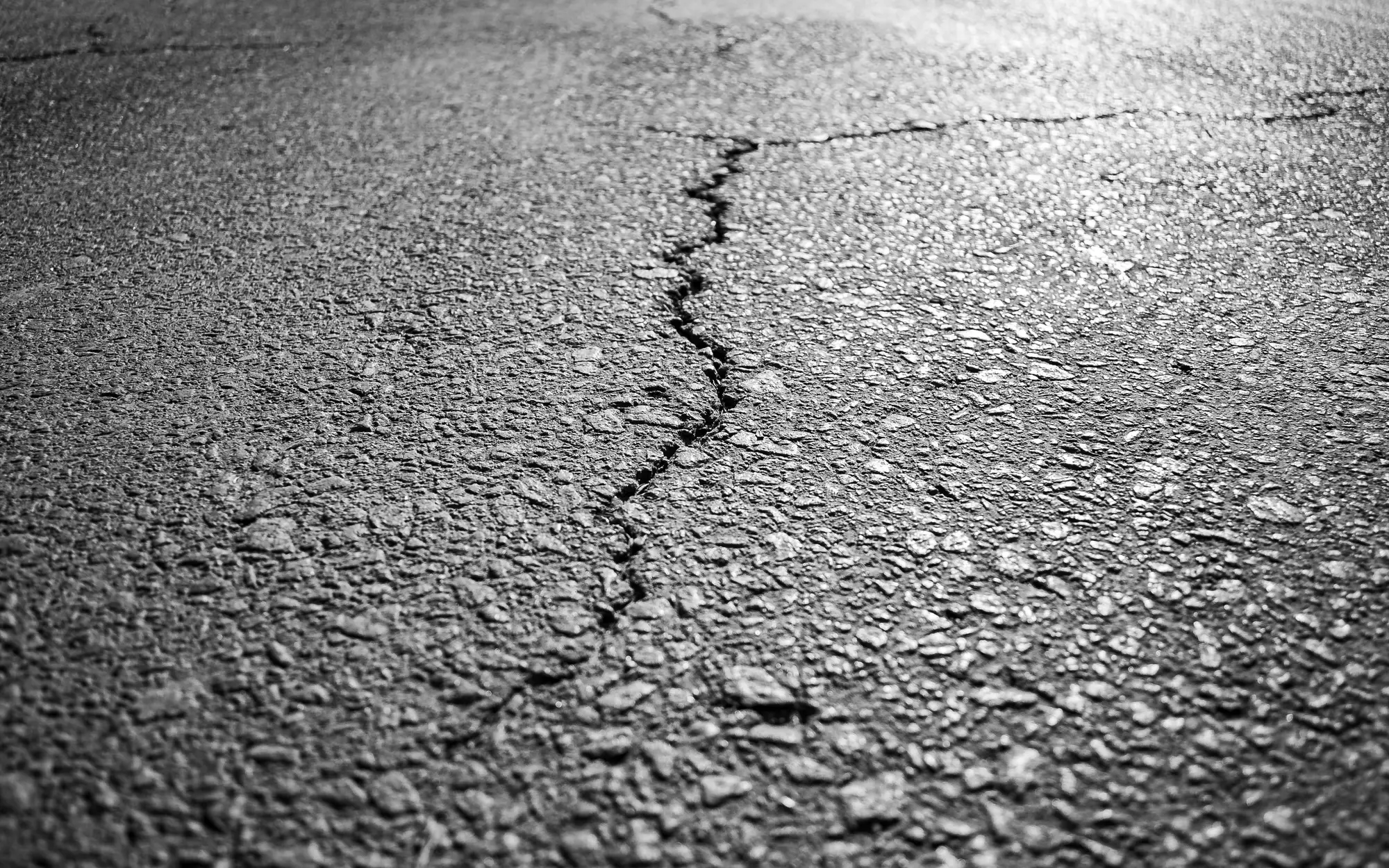
Alligator cracking is the pattern every facility manager learns to spot from a moving car: a web of interlocking cracks that looks like reptile skin, usually sitting in the drive lanes and loading zones that take the heaviest traffic. It's also the crack type that matters most for capex planning, because unlike most surface distress, the damage starts well below the surface.
What's actually failing under the surface
Asphalt pavement is built in layers, and alligator cracking starts in the base and subgrade, not the wear course. Three things drive it, usually together:
Traffic loading beyond what the section was designed for. A lot built for passenger cars that starts seeing delivery trucks and waste haulers on a daily route will fatigue faster than the original design assumed.
Water intrusion under the pavement. Once water gets into the base through an unsealed joint or a crack that was never crack-sealed, it softens the aggregate base and subgrade underneath. A wet base flexes under load instead of supporting it, and that flex is what cracks the asphalt from the bottom up.
A base or subgrade that was thin, poorly compacted, or wrong for the soil to begin with. This shows up most in lots built on expansive clay or poor drainage sites, where the same traffic load that's fine on one property causes alligatoring within five years on another.
The common thread: by the time you can see alligator cracking at the surface, the structural failure underneath has usually been going on for a while. The crack pattern is a symptom that shows up late, not early.
The stages, and why catching them early changes the repair
Alligator cracking doesn't appear all at once. It moves through recognizable stages, and the repair cost at each one is a different order of magnitude.
Stage 1 - hairline cracking. Fine, longitudinal cracks appear in the wheel paths, not yet connected. At this stage a crack seal or a surface treatment can often still buy years.
Stage 2 - interconnected pattern forms. The hairline cracks link up into the classic alligator-skin pattern. Water is now getting into the base regularly. This is the point where patching starts, and where a mill-and-overlay is still usually on the table instead of full-depth reconstruction.
Stage 3 - cracks widen and edges spall. The pieces of asphalt between cracks start to rock under traffic and the edges break down. Potholes begin forming at the worst spots.
Stage 4 - pieces dislodge and base failure is visible. At this point you're not resurfacing, you're reconstructing: removing the failed section down to subgrade and rebuilding it. The cost difference between catching a lot at stage 2 versus stage 4 is typically the difference between a line-item maintenance job and a line-item capital project.
That's the planning problem in one sentence: the repair scope changes by an order of magnitude between stages, and the only way to know which stage a given lot is in is to look at it.
Alligator cracking vs. other parking lot crack types
Not every crack on a lot points to the same fix, which is why lumping "cracking" into one line item on a condition report causes bad capex decisions.
- Transverse and longitudinal cracks run across or along the lot in fairly straight lines, often from thermal movement or reflective cracking from a joint below. These are usually sealant-and-monitor items.
- Block cracking divides the surface into large rectangular pieces, typically from asphalt that has aged and lost flexibility. That's a surface-age problem, and it reads differently from a base failure.
- Edge cracking shows up along the perimeter of the lot where support is weaker, often from inadequate shoulder or drainage at the edge.
- Alligator cracking, as above, is the one that means the base is going.
A lot can show several of these at once, which is exactly why a condition score that just says "cracking present" doesn't tell a capital planning team anything actionable. What matters is which crack type, where, and at what stage.
For a single property, that's a site walk with a camera and a clipboard. For a portfolio of forty or four hundred addresses, walking every lot every year isn't realistic, which is the gap a portfolio-wide condition pass is built to close: a ranked read on which lots are still at stage 2 and which are heading toward reconstruction, without a truck roll to every address.
If you're scoring lot condition across a portfolio instead of one site at a time, take a look at how Asset Condition Review turns that into a yearly ranked list.